
The healthcare sector has undergone a significant transformation after the pandemic.
Rising costs, staffing shortages, and data security concerns are among the greatest challenges facing healthcare industry leaders today. However, interest in new technologies is at an all-time height — including SaaS (Software as a Service) applications and platforms.
Read on to discover the six exact steps you need to follow to develop a SaaS application for healthcare industry. We will reveal how you can stay within budget from the start, how long the development process takes, and what kind of experts in healthcare development services you need on your team.
If you are considering launching a SaaS app for your company, this post will answer your most pressing questions.
A study shook the American public when it marked medical error as the third leading cause of death.
And while the statistics are improving each year, misdiagnosis, medical malpractice, and poorly coordinated care are still demanding thousands of lives. (Source: Forbes)
Technology can help us avoid human errors, improve accuracy, and find solutions to cure patients faster.
Management platforms:
Tracking:
mHealth (mobile health) and telehealth applications connect patients with their doctors and offer access to important information regarding their health.
To launch a successful SaaS application, you need to consider the needs of your future audience and plan the features accordingly.
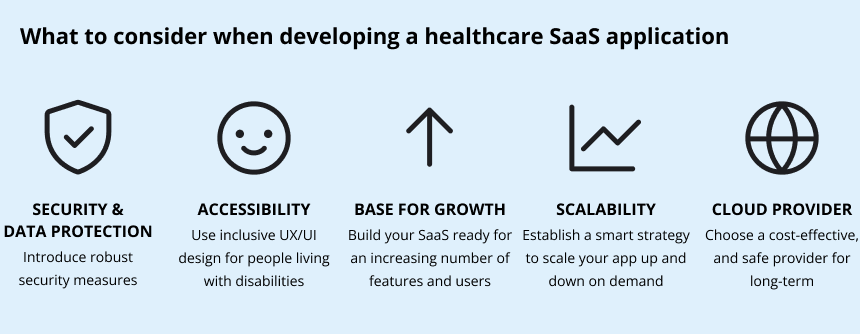
Developing vertical SaaS for a specific industry, such as healthcare, involves a few changes in the whole process.
The most crucial difference between the features of healthcare SaaS platform versus an app in a less regulated industry is the emphasis on security and compliance.
Most companies store personal data (such as name and birthdate) in their SaaS applications. However, healthcare and pharma apps handle much more sensitive data.
Because of this, it’s crucial to introduce robust security and data protection practices. When planning how to build a healthcare SaaS platform, focus on building a reliable infrastructure from the start to avoid losing millions of dollars due to poor security.
Here are a few examples of such security measures, but these can differ for every application:
Accessible UX/UI design is a common practice in every software development project. However, it’s especially important when the software is created for an elderly audience or people living with disabilities.
These are just a few SaaS design solutions that can create a more inclusive and user-friendly experience.
SaaS applications are constantly evolving and growing to stay competitive. The idea is to launch with the core functions and then gradually increase the number of features as the user base grows. This way, you can keep the costs manageable without wasting any resources.
That’s why you should build your SaaS ready for evolution from the start. One good solution is to choose a microservices infrastructure.
SaaS microservices architecture helps with scaling up and down on demand. It is a flexible modular system. Each business function has its own small module, such as a Patient Account and Appointment Calendar. Because of this, replacing an old appointment management system or removing a nonpopular module is easier and faster than in a monolithic infrastructure.
Scalability is an important aspect of every SaaS-based product development. Your app has to be able to handle a growing number of requests, users, and data without slowing down. Otherwise, you can lose customers who don’t want to wait around for your site to load.
SaaS usually has high scalability requirements since it is expected to grow over time and serve more and more users. And investing in a proper infrastructure can be really costly. That’s why you have to establish a smart scalability strategy from the beginning of the project.
A modular architecture can be a good solution for scalability as well. Then you can scale each module individually as needed. You should also inspect the third-party tools you plan to integrate with your system to ensure that they are optimized for an increasing number of requests.
The new SaaS applications are usually cloud-based, which provides great mobility and accessibility. Users can access the platforms and services from anywhere, and thanks to the subscription-based model, new clients can join or leave easily.
However, relying on a cloud provider also involves some risks. Data security can be a big concern, especially because of the widespread accessibility. Cloud is a cost-effective solution, but you have to choose the best provider for your SaaS application. One that you can depend on long-term.
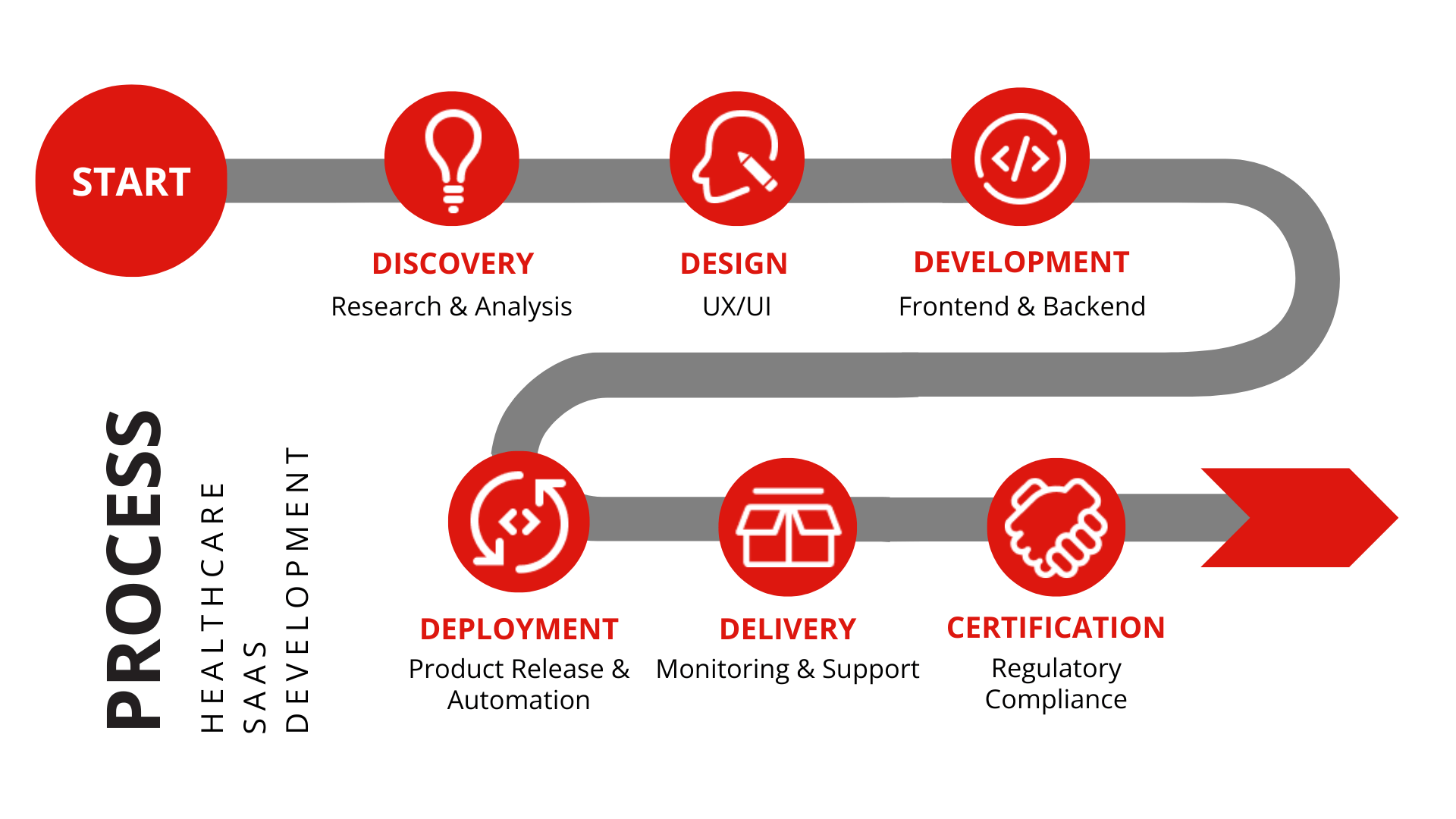
Following standard practices, the process to develop healthcare SaaS platform contains 5+1 phases.
Let’s dive into the details of each of these steps.
Data shows that a lot of software development projects exceed their budget, miss the deadline, or fail completely. The truth is that most of these outcomes can be avoided with thorough research and business analysis.
That’s why the Discovery phase is crucial. It allows product managers to set realistic expectations and estimate accurate costs and timelines.
Here are a few aspects you need to examine before developing software for your company.
Collect data on your potential users, including their objectives, challenges, and pain points.
Examine your competitor landscape in the healthcare space to discover new opportunities and note the best and worst practices.
Analyze the tools and third-party solutions used in the healthcare and pharma niche. Thoroughly examine the regulations, necessary documents, and certifications. More on these industry requirements at phase 6!
Assess the functional (features) and non-functional (performance, scalability, etc.) requirements. Later, you need to make an informed decision regarding the technology stack, infrastructure solutions, cloud platform, and architectural approach.
Define the optimal project scope to develop a SaaS application for healthcare industry. Draft a comprehensive product roadmap outlining possible future updates, improvements, and new features.
Creating an accessible user interface is one of the top priorities when it comes to the building of healthcare SaaS application. Especially if the app’s main audience is living with a disability or the elderly (for example, an app to detect dementia), it’s crucial for the design to be easily accessible to everyone.
The design process includes 3 main steps.
A persona describes the demographics, goals, skills, behavior patterns, characteristics, and motivations of a group of future users. Each persona will interact differently with the application. So it is necessary to determine how they will ‘move around’ the interface. The goal is to reflect their needs and these scenarios in the design solutions.
This step includes developing the information architecture (IA), drawing sketches, and visualizing the future system. Especially when it comes to complex health applications, planning the interactions and dependencies between the pages and screens is key.
The main goal is to follow the brand guidelines and align the style, fonts, and colors with the brand identity. Once every page, screen, and element design is approved, the developers take over to implement it.
This method is an industry standard that provides flexibility, quick feedback, transparency, and a way to avoid delays and costly changes. It refers to breaking down the whole development process into a series of 2-4 weeks cycles (sprints). Every cycle includes development, testing, fixing issues, and feedback. It also shortens the time to market because you gradually build up features and add new modules.

The client-side of engineering, where the goal is to bring the design to life and make it work. To create a responsive, fast interface, modern programming languages, and frameworks, such as React, Angular, and Vue.js, are recommended.
This phase includes all the server-side engineering. Backend engineers take care of infrastructure and data management, APIs, integrations with third-party services and tools, or other software you already use. In the case of SaaS applications for healthcare industry, usually, multiple integrations are necessary.
Backend developers are also responsible for ensuring strong data security, including user data safety. Establishing secure authentication methods and encryption technology are just two examples.
It’s essential to introduce a QA at the beginning of the process. Identifying and solving issues early on means saving time and money for the entire process.
Releasing the product is not the last step. SaaS applications require constant improvements and monitoring. To make the deployment phase frictionless, DevOps specialists automate tests and CI/CD processes of releasing updates. They also monitor and optimize large-scale infrastructure to reduce costs and ensure scalability.
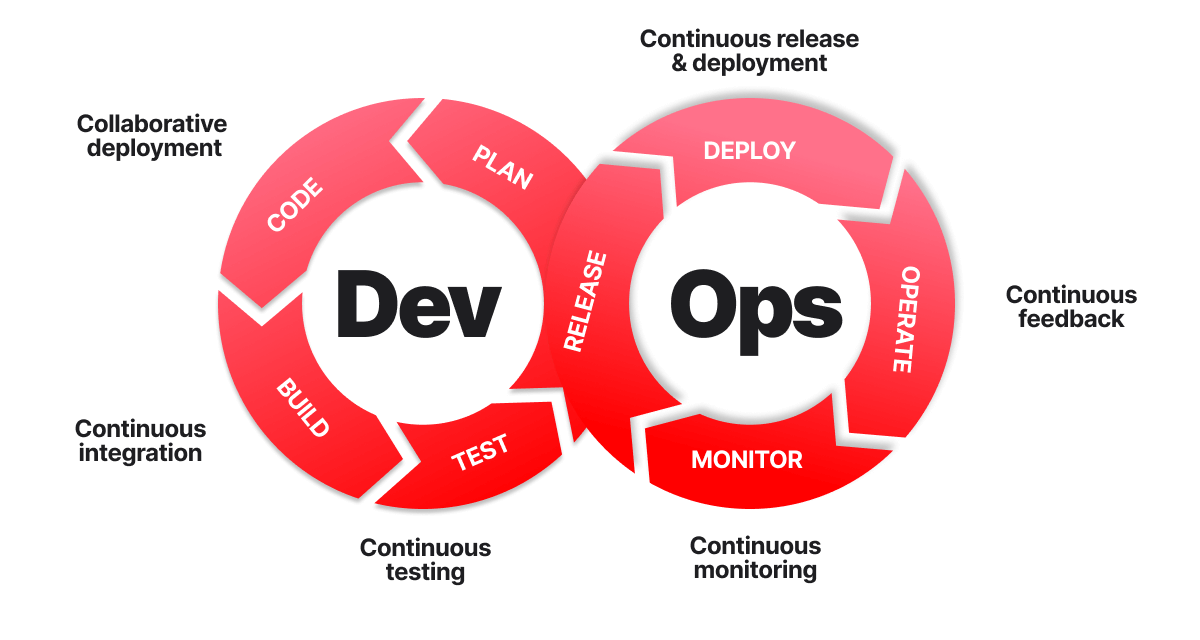
Let’s discuss how to deliver a healthcare SaaS application next. After the successful release of the app, continuous monitoring and support is necessary. Based on the market feedback and analytics, you might need to scale up the system and optimize the infrastructure. In the future, you will add new features and accommodate new customers to stay competitive and profitable.
Data security and legal compliance are top priorities when it comes to SaaS applications in the healthcare industry. We recommend that you do thorough research on all of the necessary regulations, legal and data protection requirements in the Discovery phase. When you are already in the design and planning phase, you must be aware of the regulations in your geographical area.
You need to follow different sets of sensitive personal data protection regulations depending on where you operate. Here are a few examples: PIPEDA (CA), GDPR (EU), and The Privacy Act (Australia).
In addition to these general regulations, healthcare and pharmaceutical SaaS applications (such as patient portals, telehealth apps, or EHRs) must also comply with local industry regulations and laws. In the USA, such regulations are the HIPAA and the HITECH Act.
Depending on the jurisdiction and the services your app provides, you might need to obtain certifications from regulatory bodies. While this process can be tedious, it provides a layer of trust and credibility to your application that can help you gain new clients and operate successfully in the long run.
Not sure where to start?
Let our expert team guide you through every step, from the Discovery to the Certification.
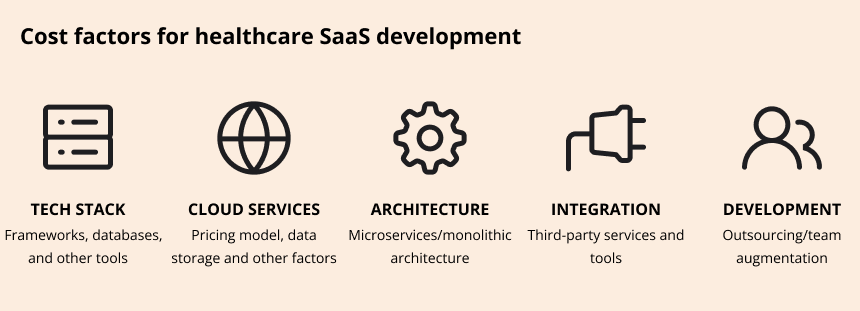
SaaS development projects always require a significant investment, as they involve a complex system that can take years to build.
The costs of healthcare SaaS platform development may vary based on the app features, the timeline, the market, the size of the dedicated team, and many other factors. Based on our experiences, the cost of a SaaS MVP (the early version of the application with core features) usually falls between $50k and $150k.
To estimate the necessary budget for your project, you need to consider the following aspects.
To minimize technical debt, first and foremost, you need to conduct proper planning and business analysis in the Discovery phase. You need to evaluate every factor and make data-based decisions to align your goals with market needs.
It’s best to hire experts to help you lay the foundations for your project and ensure that you don’t encounter any alarming surprises along the way.
Last but not least, you need to choose a sustainable monetization strategy. Most SaaS applications offer yearly or monthly subscriptions to their users. A thorough market research can reveal the best ways to go about turning your newest asset into a profitable income source.
